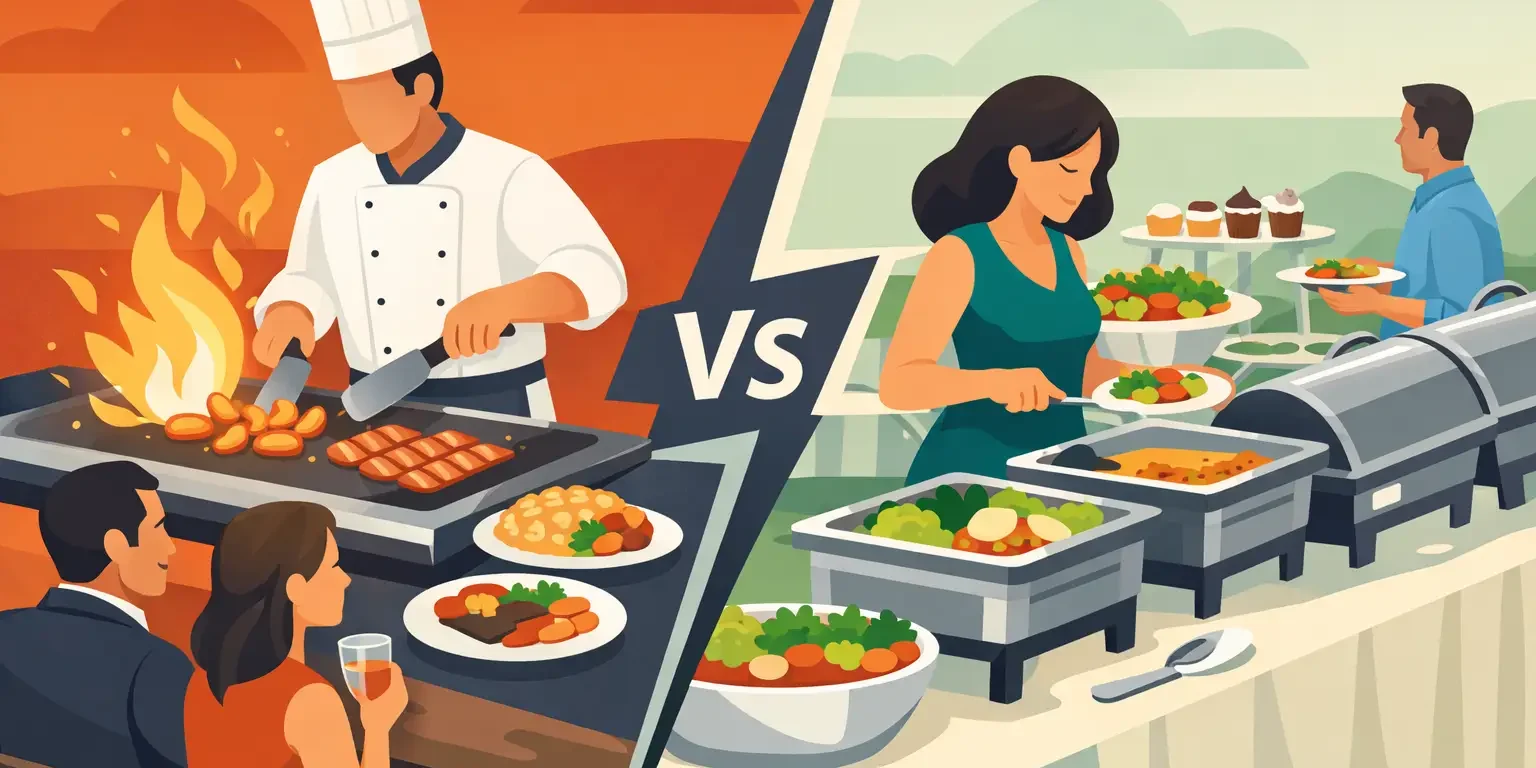
A backyard birthday with 20 guests can go in two very different directions. You can set out full pans of food and let everyone serve themselves, or gather everyone around a hot grill while a chef cooks fried rice, vegetables, and proteins right in front of them. When comparing teppanyaki catering vs buffet, the real question is not just what people will eat. It is what kind of party you want to host.
A buffet is familiar, flexible, and often a practical fit for large, fast-moving events. Teppanyaki catering adds live cooking, made-to-order meal choices, and built-in entertainment. Both can feed a crowd well. The better choice depends on your guest count, space, budget priorities, and whether you want food service to be part of the celebration.
Teppanyaki Catering vs Buffet: The Main Difference
With a buffet, the food is prepared ahead of time, delivered or set up in serving trays, and guests choose their portions from a station or table. It is designed for efficient self-service. People can eat whenever they are ready, return for seconds, and move around the party at their own pace.
Teppanyaki catering is a live dining experience. A mobile hibachi chef brings the grill, cooks on-site, and serves the meal fresh in front of your group. Guests watch the action, interact with the chef, and enjoy the familiar hibachi favorites they would order at a restaurant without having to leave home.
That difference changes the energy of the event. A buffet supports the party. Teppanyaki can become one of the reasons guests remember it.
When a Buffet Makes More Sense
A buffet is often the right call when your event is very large, your guests will arrive and leave at different times, or the schedule needs to stay loose. Think graduation open houses, office events, community gatherings, or a family celebration where 50-plus people may be moving through the space all afternoon.
It also works well when you need multiple food styles on one table. If your group includes guests looking for Italian, barbecue, sandwiches, vegetarian dishes, or several different cuisines, buffet service makes it easy to offer broad variety without creating a set dining time.
Buffets can feel lower-pressure for the host because there is no performance schedule to coordinate. Guests grab a plate when they are hungry, and the party continues around them. For a casual open-house format, that freedom can be a real advantage.
The trade-off is that the food table may become just another part of the room. It feeds people, but it does not naturally bring guests together. Food can also sit longer depending on the event flow, and portions are less personalized than a chef-prepared meal.
Why Hosts Choose Teppanyaki Catering
For birthdays, milestone dinners, family reunions, ladies’ nights, and backyard celebrations, a hibachi setup gives guests something to do together. The chef is not tucked away in a kitchen. Everyone gets to see the cooking, hear the sizzle, and enjoy the performance as the meal comes together.
That is especially helpful when you are hosting people who do not all know one another. Instead of waiting for conversations to warm up, guests have an immediate shared experience around the grill. Kids stay engaged, adults take photos and videos, and the dinner itself creates a natural focal point for the event.
The meal is also more personal. Rather than choosing from pans that were prepared before the party started, guests can select their proteins and watch their plate being cooked. A typical hibachi package may include salad, vegetables, fried rice, and customizable protein selections, making it easy to accommodate different preferences within one group.
For hosts, the biggest benefit is often convenience. You provide the space and seating, while the chef brings the grill and handles the live cooking. With Parties by Feng, that means restaurant-style hibachi can happen in your backyard, driveway, patio, or selected event location without organizing a restaurant reservation, transportation, or a complicated dinner plan.
Compare the Experience, Not Just the Price
It is natural to compare catering options by the per-person number first. But the total value of a party service comes down to what is included in the experience.
A buffet price generally covers prepared food, delivery or setup, serving equipment, and sometimes staff depending on the caterer. You may still need to account for chafing dishes, utensils, tables, cleanup, beverages, decorations, and entertainment separately. For a straightforward meal, that can be exactly what you need.
Teppanyaki catering is typically priced as a package because it includes more than food. You are paying for a chef, mobile grill setup, on-site preparation, individualized cooking, and entertainment during the meal. It can replace the need to book a separate activity for the evening, which matters when you are planning a birthday or celebration where you want the event to feel special from the start.
Neither option is automatically cheaper in every situation. A basic buffet may cost less for a very large crowd that only needs to be fed. For a group of friends or family who would otherwise go out for hibachi and then look for something else to do, private teppanyaki can be a stronger value because dinner and entertainment happen in one place.
Space, Timing, and Guest Count Matter
Before deciding, think through how your party will actually run. A buffet needs an accessible area for the serving table and enough room for guests to line up comfortably. It is easy to serve a crowd in waves, but it can create congestion if your kitchen or patio is tight.
Teppanyaki needs a safe, level outdoor or approved event space for the grill and seating arrangement. Your guests should be able to gather around the cooking area and enjoy the show. It is a more structured meal, so it works best when most of the group can arrive around the same time and settle in together.
For a party of roughly 12 to 30 guests, teppanyaki often feels especially natural. The group is large enough for real party energy but small enough that everyone can participate in the experience. Bigger events can still work, particularly with buffet-style options or multiple service plans, but the best format depends on the space, timing, and number of chefs available.
A buffet may be more practical if you expect 75 guests to stop by over several hours. Teppanyaki may be the clear winner if you have 18 guests coming for a 6:00 p.m. birthday dinner and want the night to feel planned without having to over-plan it yourself.
Choose Based on the Party You Want Guests to Remember
Ask yourself one simple question: Do you need food for the party, or do you want the food to be part of the party?
Choose a buffet when flexibility, variety, and open-house timing are your top priorities. It is dependable, easy to serve at scale, and ideal when guests need to eat on their own schedule.
Choose teppanyaki catering when you want fresh food, chef interaction, and a celebration with a built-in wow factor. It is a particularly strong fit for hosts who want a restaurant-style night at home but do not want the hassle of coordinating reservations, driving, or separate entertainment.
The best party setup is the one that matches your guest list and makes hosting feel easier. If your goal is a full backyard, smiling guests, and a dinner people are still talking about after the last plate is cleared, live hibachi gives your celebration a reason to gather around.