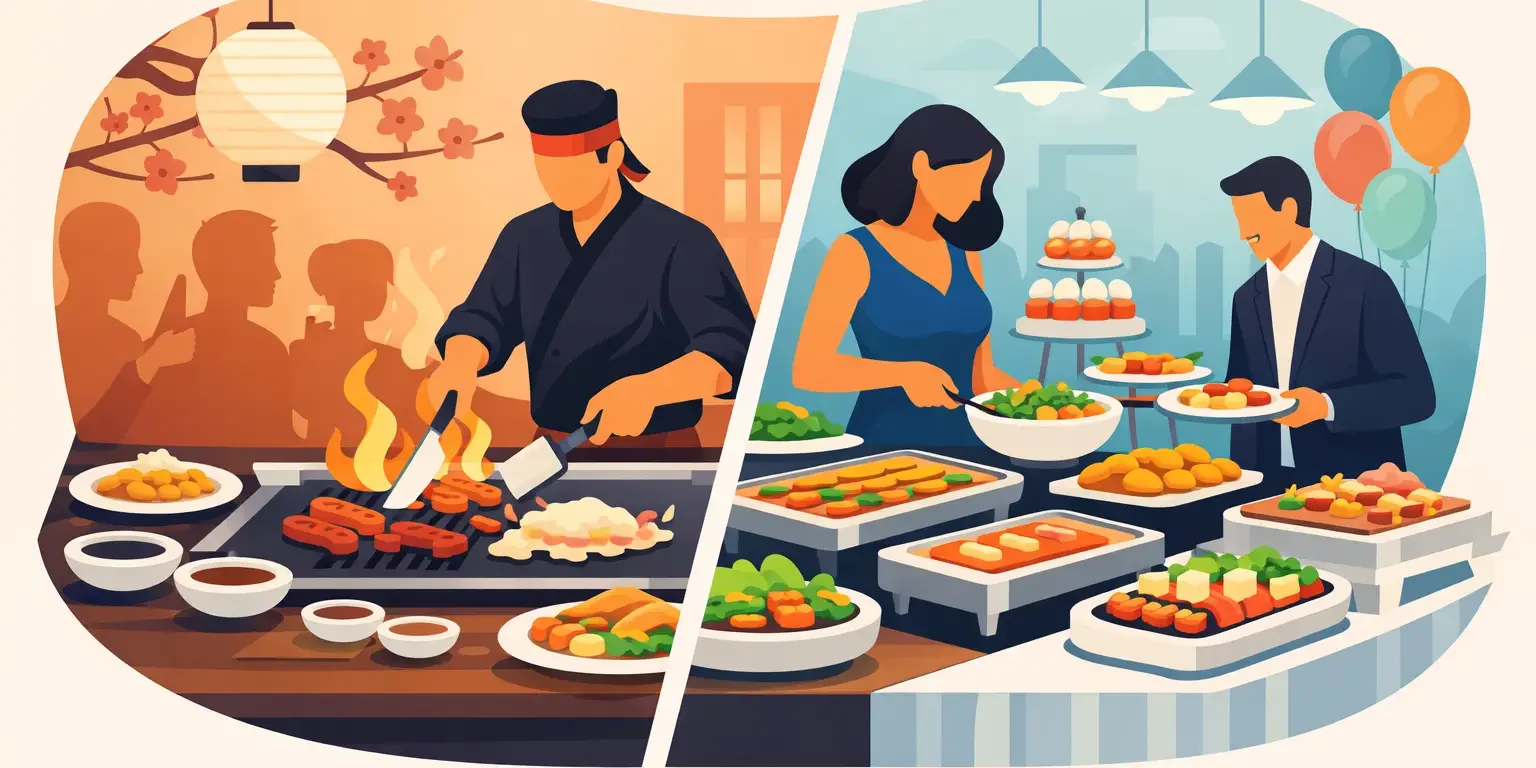
A tray of catered food can feed a room, but it does not always create a party. That is the real difference in the hibachi versus buffet decision. If you are planning a birthday, graduation, family reunion, ladies’ night, or backyard celebration, the right format depends on more than the menu. It affects your timeline, your guest experience, your cleanup, and whether people spend the night gathered around the food or simply grab a plate and scatter.
A buffet is familiar, flexible, and often a smart choice for a large crowd. Private hibachi brings a live chef, made-to-order plates, fried rice, and a full performance directly to your home or event space. Neither is automatically better. The best choice is the one that fits the kind of gathering you want to host.
Hibachi Versus Buffet: The Main Difference
The biggest difference is how food functions at the event. With a buffet, food is ready for guests to serve themselves. It is efficient and low-key. Guests can eat when they want, choose from available dishes, and return for seconds without a formal service flow.
With hibachi, the cooking is part of the entertainment. A chef prepares the meal live on a grill in front of your guests, turning dinner into a shared moment. The sound of the grill, the chef’s energy, the fried rice, and the reactions around the table create a natural center for the party.
For hosts, that distinction matters. A buffet supports the event. Hibachi can become the event.
When a Buffet Makes the Most Sense
Buffet catering is a practical option when your guest count is high, your schedule is loose, or your group needs maximum flexibility. It works especially well for open-house parties, corporate lunches, school events, and large family gatherings where people may arrive and leave at different times.
Guests with varied appetites can build their own plates and move at their own pace. A buffet can also make it easier to offer several cuisines or accommodate a broad mix of dietary needs in one spread. If your priority is giving everyone plenty of food with minimal structure, this format does its job well.
A buffet may be the better fit when seating is limited, too. Guests do not need to gather around one cooking area at the same time. They can eat at patio tables, in the kitchen, in the living room, or wherever the party is happening.
Still, hosts should plan for the less glamorous details. Someone needs to set up the serving area, monitor food, replace utensils, manage serving lines, and handle leftovers. Depending on the caterer, the food may arrive hot and ready, but it will not have the same just-cooked moment once the party gets going.
Why Private Hibachi Feels Different
Private hibachi is built for groups that want dinner and entertainment in one booking. Instead of coordinating a restaurant reservation, transportation, separate activities, and catering, you bring the experience to your own backyard or venue.
A mobile hibachi chef arrives with the grill and cooks live for your group. Guests watch their meals come together, enjoy the interaction, and sit down to a hot plate that feels personal. Typical package-style meals can include salad, vegetables, fried rice, and protein selections, giving the party a complete dinner without asking the host to cook.
This format is especially strong for celebrations where the people attending already know one another, or want to. A hibachi grill gives everyone something to react to right away. It helps break the ice at a milestone birthday, brings different generations together at a family event, and gives friends plenty of photo- and video-worthy moments at a backyard party.
There is also a convenience factor that hosts appreciate. You are not packing up decorations early to make a reservation. You are not waiting for a table. You are not trying to keep a room full of guests entertained while dinner is being delivered. The chef comes to you, cooks in front of your group, and keeps the energy moving.
Comparing Cost, Value, and What You Receive
Price matters, but the lowest per-person food cost is not always the best value for the party you are trying to create. Buffet pricing can be attractive because food is prepared in volume and guests serve themselves. For very large crowds, it may be the most budget-friendly way to provide a full meal.
Hibachi is usually priced as an experience-based catering service. You are paying for fresh cooking, chef labor, the mobile grill, service time, and entertainment along with the meal. For a group celebrating a special occasion, that can replace costs you might otherwise spend on a restaurant outing, an activity, or extra party entertainment.
Ask what is included before comparing quotes. Does the package include proteins, rice, vegetables, salad, sauces, setup, and cleanup? Are there guest minimums? Is child pricing available? Can you add premium proteins or extra sides? A clear package makes planning easier because you know what your guests will receive before the day of the event.
For groups in the typical 12-to-50-plus guest range, private hibachi can deliver strong value when the goal is a memorable hosted experience, not just a meal. For a 100-person open house where guests cycle through all afternoon, a buffet may stretch the budget and space more effectively.
Setup and Hosting Requirements
A buffet needs a serving surface, room for chafing dishes or food containers, plates, utensils, napkins, and a plan for trash and leftovers. It is simple, but it still takes space. If you are hosting outdoors, weather and access to tables matter.
Hibachi requires a suitable outdoor location or approved event space for the grill setup, plus enough room for guests to sit comfortably around the cooking area. A backyard, driveway, patio, or spacious venue area can work well when there is safe access for the chef and equipment. Before booking, confirm your guest count, available space, local venue rules, and any weather backup plan.
The good news is that the host does not need to become the event chef. With a company like Parties by Feng, the mobile chef brings the grill and handles the live cooking, so you can focus on drinks, decorations, music, and actually enjoying your guests.
Guest Experience: Choose the Energy You Want
Think about the mood you want at 7 p.m., not just the menu you want at booking. A buffet creates freedom. Some guests will eat right away, others will mingle first, and the evening can unfold casually. That makes sense for a relaxed gathering with many moving parts.
Hibachi creates a shared schedule and a built-in highlight. Your guests gather, watch, laugh, eat together, and talk about the chef’s performance afterward. It is a better match when you want the food to bring everyone together instead of sending them in different directions.
It also gives guests more confidence about their meal. Rather than guessing which tray has what, they can choose from available protein options and watch their food being prepared. That made-to-order feeling is a major reason hibachi works so well for birthdays, anniversaries, engagement celebrations, and friend groups looking for something beyond a standard catered dinner.
So, Should You Book Hibachi or a Buffet?
Choose a buffet when your party is large, open-ended, and focused on easy self-service. Choose private hibachi when you want your guests seated, engaged, fed fresh food, and entertained without leaving home.
There is room for both formats, and some larger events may even benefit from a hibachi centerpiece with buffet-style additions. The key is matching the food service to your guest count, space, budget, and party personality.
Before you send the invitations, picture your guests arriving. If you want them gathered around a sizzling grill, laughing with a chef, and leaving with more than a full plate, make the meal the moment they will remember.