If you are comparing private hibachi party pricing, you are probably planning the kind of event where food needs to do more than just feed people. You want dinner, entertainment, and a setup that feels special without turning your house into a full catering project. That is exactly why mobile hibachi has become such a popular choice for birthdays, backyard parties, family celebrations, and girls’ nights.
The good news is that pricing is usually more straightforward than people expect. The catch is that the final number can shift based on guest count, package structure, proteins, add-ons, and where the party takes place. Once you understand those moving parts, it gets much easier to figure out what makes sense for your event and budget.
How private hibachi party pricing usually works
Most private hibachi events are priced per person rather than as one flat catering fee. That model is easier for hosts because it makes the cost feel predictable from the start. If you know how many people are coming, you can get close to your total quickly.
A standard package often includes the core parts guests expect from a hibachi meal: salad, vegetables, fried rice, and a choice of proteins. In many cases, the chef also brings the grill and cooks on site, which means the entertainment is built into the package rather than added as a separate line item.
That said, private hibachi party pricing is not just about the food on the plate. You are also paying for travel, setup, breakdown, chef time, equipment, and the live cooking experience. This is one reason private hibachi costs more than picking up trays from a restaurant, but it is also why it feels like an event instead of just dinner.
What affects the total cost most
Guest count changes everything
The biggest pricing factor is usually the number of guests. Many private hibachi companies have a minimum headcount, often because sending a chef, grill, and equipment to a home event has fixed labor and travel costs. If your group is below the minimum, you may still be able to book, but the effective per-person cost can feel higher.
Larger groups can create better value per guest, especially when the company offers package pricing, weekday specials, or buffet-style service for bigger events. A party for 20 often prices out differently than a party for 12, even if the menu is similar.
Protein choices matter
Chicken and vegetables usually keep pricing lower than steak, shrimp, scallops, or filet upgrades. If every guest chooses premium proteins, expect the total to rise. If your group is flexible and willing to mix standard and premium options, you may have more room to control the budget.
This is one of those it-depends areas. Some hosts want the full restaurant-style experience with lots of upgrades, while others care more about the show and social atmosphere than building the most expensive plate possible.
Add-ons can move the number fast
A base package may cover the essentials, but extras can add up quickly. Noodles, appetizers, extra proteins, upgraded sauces, kids’ meals, dessert options, and premium combinations all change the final quote. None of that is bad – add-ons can make the party feel more custom – but they are often where the total starts to drift from the original estimate.
If you are budgeting carefully, ask what is included by default and what is optional. That simple question prevents surprises later.
Location and travel can be part of pricing
In-home and backyard hibachi is built around convenience, but travel still matters. Service areas, mileage, tolls, and event distance can affect the quote, especially if your party is outside the company’s main market. Some businesses build local travel into their pricing, while others add a fee for longer routes.
For hosts, this is less about finding the cheapest option and more about making sure the quote is clear. Transparent pricing is always easier to plan around than a low starting price with multiple add-ons after the fact.
What you are really paying for
Hosts sometimes compare hibachi catering to standard food catering and wonder why the numbers are different. The answer is simple: private hibachi is a service and an experience.
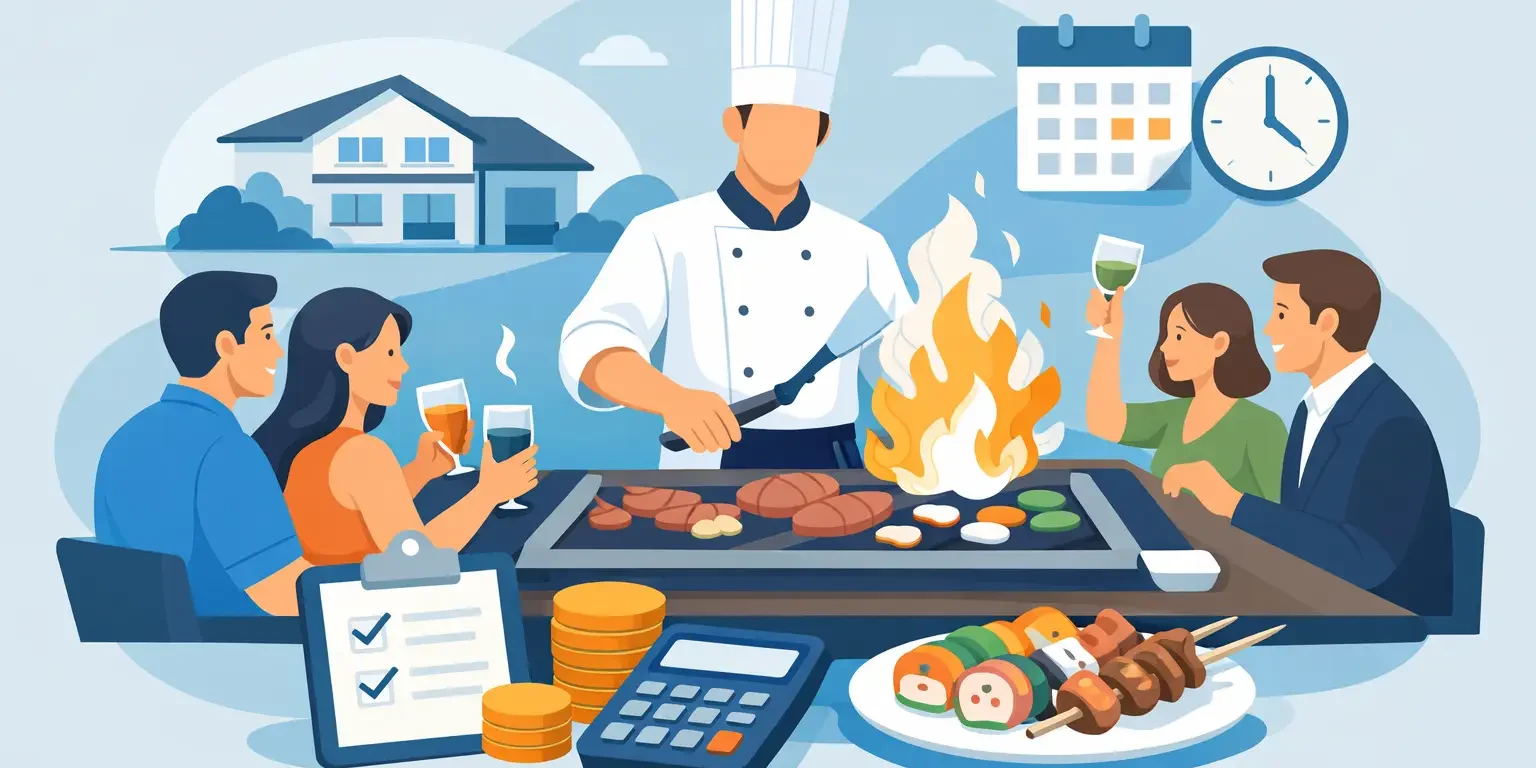
A mobile hibachi chef is not just dropping off food. They are arriving with equipment, setting up a live cooking station, preparing meals to order, interacting with guests, and creating the kind of energy that keeps everyone gathered around the table. For many parties, that replaces the need for separate entertainment.
That value matters most when you are planning an event at home and want something that feels elevated without renting a venue. Instead of coordinating food delivery, setup, timing, and cleanup from multiple providers, you are booking one concept that covers dinner and atmosphere at once.
Common pricing formats you may see
Per-person package pricing
This is the most common and usually the easiest to understand. You pay a set amount per guest based on the selected menu. It works well for birthdays, family dinners, and backyard parties where each person wants a hibachi plate and the host wants a clean estimate.
Group minimum pricing
Some events are quoted with a required spend or minimum guest count. This protects the company from sending staff and equipment for a very small gathering without enough revenue to cover the trip.
Buffet pricing for larger groups
For bigger events, buffet-style hibachi catering can sometimes be more efficient than individual made-to-order plates. It may lower labor demands and speed up service, which can affect the total cost. The trade-off is that it may feel less interactive than a traditional chef-at-the-grill setup.
How to budget without overcomplicating it
Start with your real guest count, not your optimistic one. If you think 18 people are likely to come, do not price the event around 25 just because a few extra may show up. Next, decide whether you want a simple package or a more customized menu with premium proteins and add-ons.
After that, think about the event style. A casual birthday in the backyard may not need every upgrade. A milestone celebration or special family gathering might be worth the extra spend. The best budget is not always the lowest one. It is the one that matches the moment.
It also helps to ask for the full quote early, including travel, service minimums, kids’ pricing, and optional extras. A clear quote gives you more control and makes comparing providers much easier.
How to tell if the pricing is fair
Fair pricing is not just about finding the lowest number. It is about understanding what is included, how clear the package is, and whether the service actually removes stress from planning your event.
If a company offers transparent package pricing, easy communication, and a clear breakdown of what guests get, that usually signals a better booking experience. If the quote is vague or keeps changing, even a lower price can become frustrating.
This is where a company like Parties by Feng stands out for many hosts. The appeal is not just the chef performance. It is the simple, we-come-to-you model, the straightforward package structure, and the fact that you can build a fun event around a format that already works.
Questions to ask before you book
Before you commit, ask how many guests are required, what is included in the per-person rate, whether children are priced differently, and what setup space is needed. You should also ask about weather backup plans for outdoor parties, travel fees, and whether gratuity is included.
Those questions are practical, but they also tell you a lot about how organized the service is. A good hibachi catering company should be able to answer them quickly and clearly.
Why the best-priced event is not always the cheapest one
The cheapest quote can be fine for some parties, but private hibachi works best when the logistics are smooth and the experience feels easy for the host. If one company is slightly higher but handles setup, timing, communication, and guest flow better, that difference can be worth it.
When you are inviting people into your home, convenience counts. So does reliability. Great private hibachi party pricing is not just a number. It is a balance of food quality, entertainment, transparency, and how much work the service takes off your plate.
If you are planning a party that should feel lively, personal, and easy to host, the smartest move is to look beyond the starting price and focus on the full experience your guests will remember.