A backyard hibachi party has one big advantage over a restaurant reservation: the experience comes to you. The one variable no host can control is the forecast. Knowing how to plan rain backup before invitations go out keeps a passing shower from turning into a last-minute scramble – or a party cancellation that disappoints everyone.
For a mobile hibachi event, rain planning is not only about keeping guests dry. Your chef needs a safe, workable cooking area, guests need room to relax and eat, and you need a clear decision process that does not leave everyone checking the weather app an hour before dinner. A little preparation protects the fun, the food, and your peace of mind.
Start With a Realistic Look at Your Space
Walk through your yard as if 20 guests were already standing in it. Where will the chef and grill set up? Where will guests sit, line up for photos, grab drinks, and move around once dinner begins? Then identify the dry areas you could use if rain arrives.
A covered patio, open-sided pavilion, sturdy pergola, garage apron, or professionally installed event tent may help, but not every covered area is automatically appropriate for live cooking. A hibachi grill produces heat, smoke, and steam. Low ceilings, enclosed garages, screened porches, and tight spaces can create ventilation and safety issues. Never assume the grill can simply be moved indoors because the forecast changes.
Before booking, share photos of the planned setup area with your catering team. Include the ceiling height if there is a roof, the approximate dimensions, nearby doors or walls, and the route from the chef’s vehicle to the cooking space. This gives the team time to confirm what works instead of making a difficult call on party day.
How to Plan Rain Backup That Still Feels Like a Party
The best backup plan is usually not a completely different event. It is a weather-ready version of the same celebration. Guests should still feel like they are attending a lively chef experience, not sitting through a compromise meal in a cramped corner of the house.
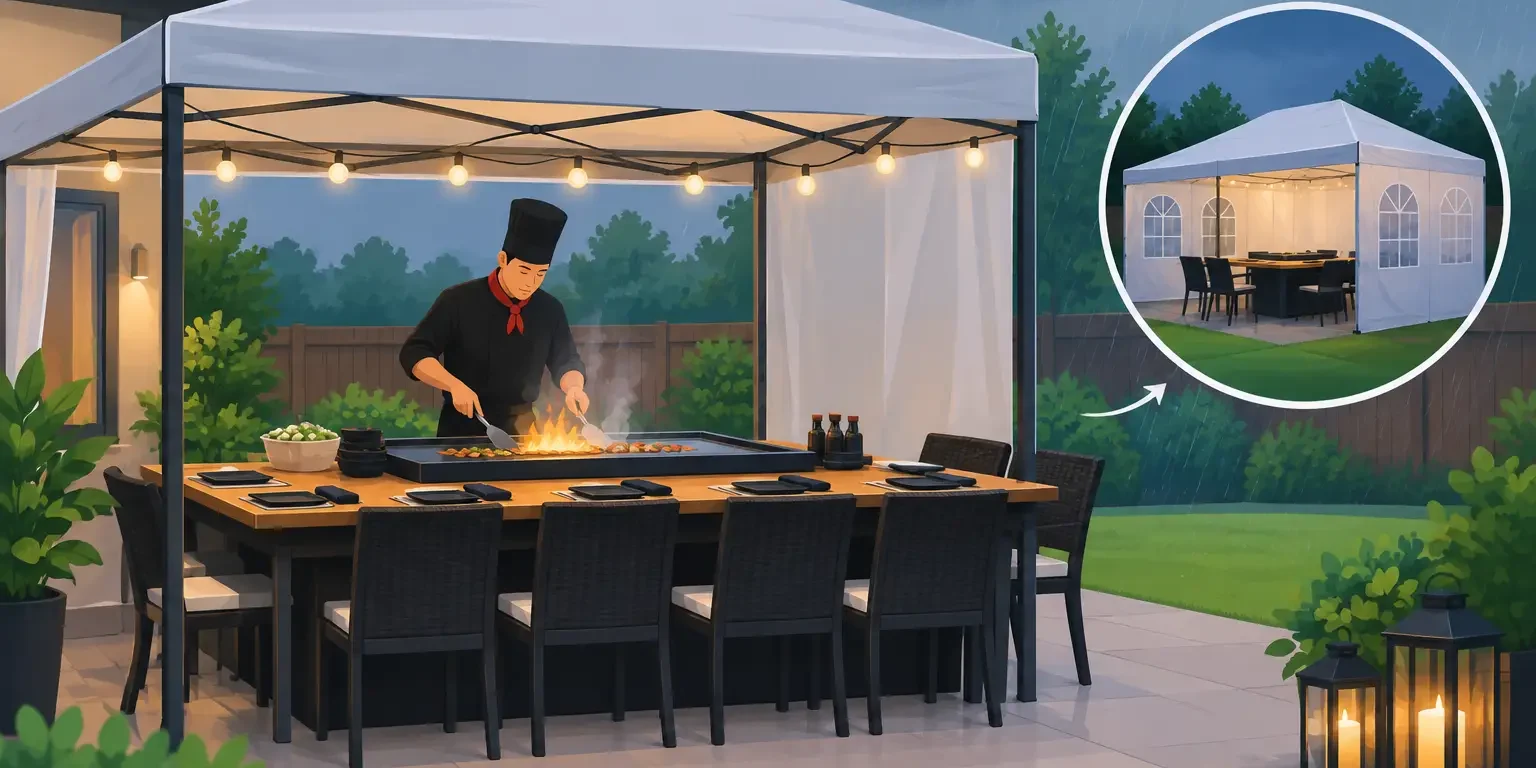
Choose one primary cooking location and one approved alternate. The primary spot might be an open section of the backyard. Your alternate could be a high-clearance, open-sided tent on a level patio or driveway, provided the catering team confirms it is safe for the grill. Keep the two spaces close enough that guests do not have to trek through wet grass to watch the chef perform.
Think in zones. The cooking zone needs safe clearance and airflow. The guest zone needs dry seating, room for the group to gather, and a practical path to restrooms and drinks. The welcome zone can be inside your home, where guests can arrive, put down umbrellas, and start with a beverage while final setup happens outside.
If your group is large, one small pop-up canopy will not solve the problem. It may cover a drink table, but it is not a substitute for a properly sized, secure structure. Plan for the actual footprint of your tables, chairs, chef setup, and walkways. When in doubt, ask a tent rental provider for sizing based on your guest count and layout.
Pick the Right Cover, Not Just Any Cover
Rain backup has trade-offs. A tent adds cost and coordination, but it gives you much more control over the experience. A covered patio is convenient, but it may be too low or enclosed for cooking. Moving everyone inside may keep guests dry, but it can take away the live hibachi atmosphere your group was excited about.
If you rent a tent, choose a quality structure that is installed and secured by professionals. Make sure it has adequate height, open sides or approved ventilation, and enough space around the cooking area. Ask about sidewalls too. They can block wind-driven rain, but closing every side can reduce airflow, so follow your chef’s guidance on what is appropriate.
Avoid placing the grill directly beneath a standard backyard umbrella, a low fabric canopy, or anything not designed for the heat and conditions involved. Also avoid trying to protect the cooking area with loose tarps. They can flap in the wind, collect water, and create more problems than they solve.
Your ground matters as much as your cover. Grass can become muddy, and a sloped yard can send water toward the cooking or seating area. A level driveway, patio, or paved side yard often makes the strongest rain backup location. If you are using a tent on grass, consider flooring or a clear path of mats so guests in heels, dress shoes, or sandals are not walking through mud.
Make Guests Comfortable Between the Drops
A great weather plan covers the small details that people remember. Put umbrellas or a basket for wet umbrellas near the entrance. Keep towels handy for damp chairs and tables. Move favors, paper decorations, and place cards away from open sides where wind can blow rain through.
For evening parties, add lighting to the backup area. Overcast skies get dark quickly, and a tent can feel dim before sunset. String lights, battery-operated table lights, and pathway lighting make the space feel warm while helping guests move safely.
Food and drink stations need protection too. Keep beverages inside or under reliable cover, and make sure any self-serve items are not exposed to rain. If the temperature drops, offer a few cozy options like hot tea, coffee, or a warm appetizer. A little comfort goes a long way when guests are dressed for a summer celebration and the weather turns cool.
You do not need to announce every weather concern to guests. A simple note the day before can set expectations: “We are watching the forecast and have a covered plan ready, so come ready to celebrate!” That message feels confident without making the event sound uncertain.
Set a Weather Decision Time Before Party Day
The most stressful rain plan is one that has no deadline. Decide ahead of time when you will check the forecast and when the backup layout must be activated. For many hosts, the right time is 24 to 48 hours before the event, especially if a tent, extra tables, or alternate setup requires advance coordination.
Watch more than the rain percentage. Look at the hourly forecast, expected wind, temperature, thunderstorm risk, and the timing of the heaviest rain. Light rain at 2 p.m. may have no impact on a 6 p.m. party. Thunderstorms or strong winds around setup and service are different. Safety decisions should always come before trying to preserve the original layout.
Let your catering team know as soon as the forecast starts to look questionable. Parties by Feng can help hosts think through setup logistics, but the earlier the conversation happens, the more options you will have. Waiting until the chef is on the way may leave little room to adjust.
Have one point person for weather communication. It can be you, a spouse, a family member, or a planner. That person should know where the chef will park, which setup area is approved, where guests should be directed, and how to reach rental providers if needed. This prevents five well-meaning people from giving different instructions on party day.
Plan for the Conditions You Cannot Solve With a Tent
A tent can help with rain, but it does not eliminate every weather risk. Lightning, severe winds, flooding, extreme heat, and unsafe ground conditions may require a delay, a different setup, or a reschedule based on your provider’s policies. Be flexible enough to protect everyone involved.
Consider the timing of your party too. A brunch or early afternoon celebration may offer more room to wait out a brief storm than an event scheduled close to sunset. If your guests are mostly local, moving the start time by 30 to 60 minutes can sometimes be easier than forcing the party through the worst part of the forecast. If guests are traveling farther, a solid covered setup may be the better investment.
Keep decorations practical. Balloon arches, lightweight signs, paper centerpieces, and uncovered dessert displays can struggle in wind and humidity. Save the delicate details for an indoor welcome table, and choose weighted decor outdoors. The chef performance, fresh food, and your people are what make the party memorable anyway.
A rain-ready hibachi party is still a party guests will talk about. Give your chef a safe place to cook, give your guests a dry place to gather, and make the weather decision early enough that everyone can relax. Then let the sizzling grill, flying spatulas, and full plates do what they do best: turn your backyard celebration into a night worth celebrating, rain or shine.