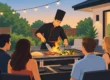
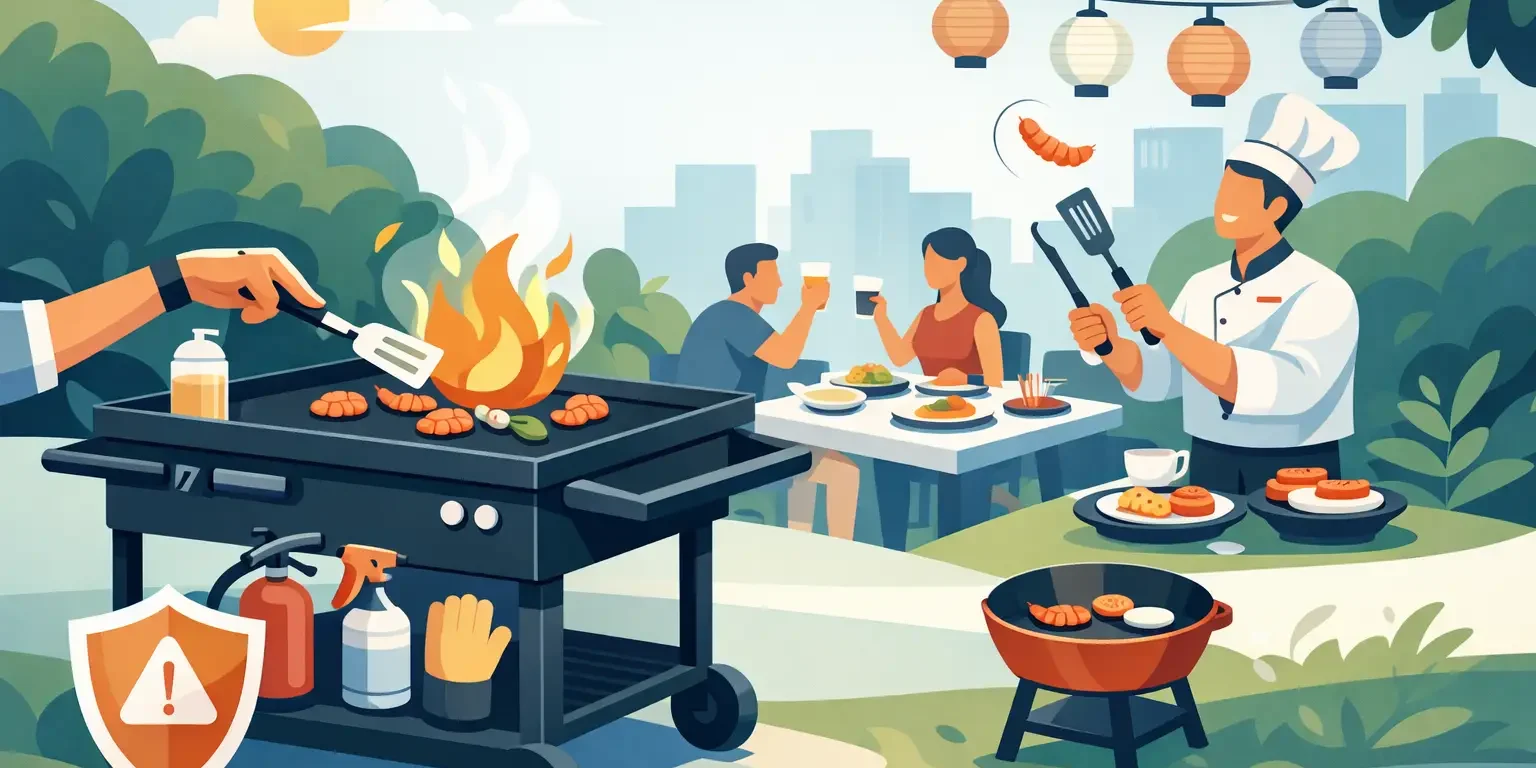
A live hibachi chef can turn an ordinary backyard dinner into the moment everyone talks about for weeks. The key to keeping that energy fun is mobile grill safety: giving the chef a clear, stable outdoor workspace while making sure guests, kids, and pets have room to enjoy the show safely.
A professional mobile hibachi setup is designed for on-location cooking, but every home and event space is different. A few simple preparations before your chef arrives can prevent last-minute setup changes, keep service moving, and let you focus on celebrating instead of troubleshooting.
Mobile Grill Safety Starts With the Right Setup Space
Choose an outdoor area with a firm, level surface. A driveway, patio, paved side yard, or level backyard area is usually ideal. Grass can work when it is dry and flat, but uneven ground, mud, loose gravel, and steep slopes can make safe grill placement more difficult.
The grill needs open space around it. Avoid placing it directly beneath a low deck, awning, tent, roof overhang, or tree branches. Heat, smoke, and occasional cooking flare-ups need somewhere to go. Keep the cooking area away from doors, windows, garage openings, wooden fences, outdoor furniture, and anything that could be affected by heat or smoke.
Before the event, take a look at the path from the driveway or street to the cooking location. A mobile chef arrives with equipment, ingredients, and supplies, so clear a reasonably direct route when possible. Move bikes, toys, planters, extension cords, and other obstacles that could create a trip hazard. This small step makes setup quicker and gives everyone more time for dinner and the chef performance.
Give the Chef Room to Work
A hibachi grill is entertainment, but it is still an active cooking station. Your chef needs space to move, handle hot tools, serve meals, and work comfortably around the grill. Guests should have a great view without crowding the cooking surface.
Set tables and chairs far enough back to create a natural guest zone. If your group includes excited children, it helps to designate where they can sit or stand for the show. Kids love the flames, fried rice tosses, and interactive moments, but an adult should always keep them from running toward the grill.
Pets need a plan too. Even the friendliest dog can become curious around new people, food aromas, loud sizzling, or sudden flames. Keep pets indoors, behind a gate, or comfortably separated from the cooking and serving area until the grill has cooled and equipment is being packed away.
Weather Matters More Than Most Hosts Expect
Mobile grill safety is not only about the grill itself. Wind, rain, heat, and changing temperatures can affect the comfort and flow of an outdoor event.
A light breeze may be no problem, but strong winds can carry smoke toward guests, make table settings blow around, and complicate cooking conditions. If possible, select a cooking area with some open-air protection from the wind, without enclosing the grill under a structure. Your chef may recommend adjusting the grill position based on conditions when they arrive.
Rain is another reason to have a backup plan. Do not assume a covered porch or low pop-up tent is automatically safe for live grilling. The grill needs adequate ventilation and clearance from fabric, ceilings, and structures. If rain is in the forecast, communicate with your catering team ahead of time so you can discuss a suitable outdoor covered area, a reschedule option, or another plan based on the setup at your home.
On hot days, think beyond the grill. Give guests shade, cold drinks, and a place to cool down. On cool evenings, outdoor heaters and blankets can make the party more comfortable, but heaters should be positioned away from the cooking zone and according to their own safety instructions.
Keep the Cooking Zone Clear and Calm
The best hibachi parties feel lively, not chaotic. Once the chef has selected the grill location, treat that area as the kitchen. Avoid storing coolers, gift tables, decorations, strollers, or extra chairs nearby.
Decor matters at birthdays, graduations, ladies’ nights, and milestone celebrations, but keep balloons, banners, paper goods, and loose fabric away from the grill. Skip anything that could blow into a hot surface. If you are setting up string lights or speakers, run cords along the edge of the event area and secure them so guests are not stepping over them on the way to dinner.
Ask guests to keep drinks off the chef’s work table and away from the grill. A spilled cocktail or tipped water bottle is inconvenient anywhere, but especially near hot equipment. Create a separate drink station, and your guests can refill throughout the night without walking through the cooking area.
For larger events, one host or designated helper can be especially useful during arrival and setup. They can answer questions about access, point out the restroom, help direct guests, and keep the grill area clear while the chef gets ready. That is not about making the event formal. It simply lets the chef focus on preparing a great meal safely and on time.
What Hosts Should Have Ready
Your mobile hibachi team brings the cooking equipment and handles the food service details agreed upon for your event. Hosts can make the experience easier by confirming a few basics before the appointment.
Make sure the chef has access to the planned outdoor space and that gates, side entrances, or driveways are not blocked. If the event is after dark, turn on outdoor lighting along the walking path and around the guest area. Good lighting helps with setup, guest movement, serving, and end-of-night cleanup.
Have a clear point of contact available when the chef arrives. If your home has a particular parking arrangement, a narrow driveway, or an entrance that guests often miss, share that information in advance. The more clearly everyone understands the layout, the smoother the arrival will be.
It is also smart to know where your household fire extinguisher is and ensure it is accessible. This is a standard good-practice step for any home gathering involving cooking, candles, outdoor heaters, or a fire pit. Never attempt to put out a grease fire with water. If there is an emergency, keep guests back and follow the instructions of trained professionals and local emergency services.
Food Safety Is Part of the Experience
A great hibachi meal moves fast, especially once the grill is hot and guests are ready to eat. Help your chef protect food quality by keeping the serving area uncluttered and making room for guests to receive their meals without reaching across hot surfaces.
Tell your catering team about food allergies, dietary restrictions, and guest preferences before the event whenever possible. This gives the chef the best opportunity to plan the order of cooking, separate ingredients when needed, and answer questions clearly. Do not rely on a guest mentioning an allergy after cooking has already started.
If you are providing extra appetizers, desserts, or beverages, keep cold foods chilled until serving time and do not leave perishable items sitting outside for long periods. For a relaxed backyard party, simple is often better: let the hibachi meal be the main event and set up extras away from the active cooking station.
A Professional Chef Makes the Difference
There is a reason a mobile hibachi experience feels easier than trying to run a grill station yourself while hosting 20 friends. A professional chef arrives prepared to cook, manage the pace of service, and create a memorable show while you spend time with your guests.
At Parties by Feng, the goal is to make private hibachi events exciting without making them complicated. Your role is to provide a suitable outdoor space and share the key details ahead of time. The chef handles the live cooking experience, from sizzling vegetables and fried rice to the personalized protein selections your group is excited to try.
If you are unsure whether your patio, driveway, or backyard works, ask before your event date. A quick conversation about the surface, access, guest count, and weather backup plan can save a lot of uncertainty.
The best party setup is not the fanciest one. It is the one where the chef has room to cook, guests have room to laugh, and you can enjoy that first burst of flame knowing the details are already handled.