A backyard hibachi party can be one of the easiest ways to make a birthday, family dinner, or ladies’ night feel special. The chef cooks live, guests gather around the grill, and dinner becomes part of the entertainment. But in the Northeast, a perfect-looking forecast can turn into wind, showers, heat, or a sudden temperature drop by party time. This weatherproof event catering guide helps you plan ahead so changing weather does not change the fun.
The goal is not to control the forecast. It is to give your chef, your food, and your guests a setup that can handle a few surprises. A little preparation means you can spend the party enjoying the fried rice show instead of checking the radar every five minutes.
Your Weatherproof Event Catering Guide Starts Before the Invite
When choosing a date, think beyond the high temperature. A 78-degree afternoon may sound ideal, but an exposed backyard can feel much hotter in direct sun. A 65-degree evening can be comfortable until the sun goes down and guests are sitting still with drinks in hand.
For most backyard gatherings, an earlier dinner time works well in spring and fall, while a later start can be more comfortable in the middle of summer. If you are hosting a birthday or milestone celebration, give guests a clear arrival time and plan the chef experience around it. This keeps the group together when the live cooking begins and prevents guests from waiting outside too long.
Check the forecast a few days before the event, then again the morning of the party. Look at rain percentage, wind speed, temperature changes, humidity, and the hourly forecast, not just the daily weather icon. Light rain and a passing shower are very different from steady rain or strong wind.
Pick a Setup Area That Works for the Grill
A mobile hibachi experience needs a safe, level outdoor area where the chef can cook and guests can watch comfortably. A patio, driveway, deck rated for the setup, or paved backyard space may work well depending on the event. Soft, muddy grass, uneven pavers, steep slopes, and cramped corners can create avoidable problems.
Before booking, take a practical look at your space. Think about the path from the street or driveway to the cooking area, not only the cooking area itself. The chef and equipment need a clear route with no tight gates, stairs, loose gravel, or furniture blocking the way.
Give the grill enough room for the chef to work safely and for guests to sit or stand without crowding the cooking surface. Your group will naturally gather around the performance, especially when the fried rice, vegetables, and proteins hit the grill. Build in extra space so children are not weaving between the chef and the audience.
Overhead protection can help, but it must be chosen carefully. A solid covered patio may offer shelter from light rain or strong sun if it has proper open-air ventilation and enough clearance. A low canopy, enclosed garage, or closed tent is not automatically a safe place for live grilling. Never assume a cover works without confirming the setup and safety requirements with your caterer first.
Make a Real Rain Plan, Not a Last-Minute Guess
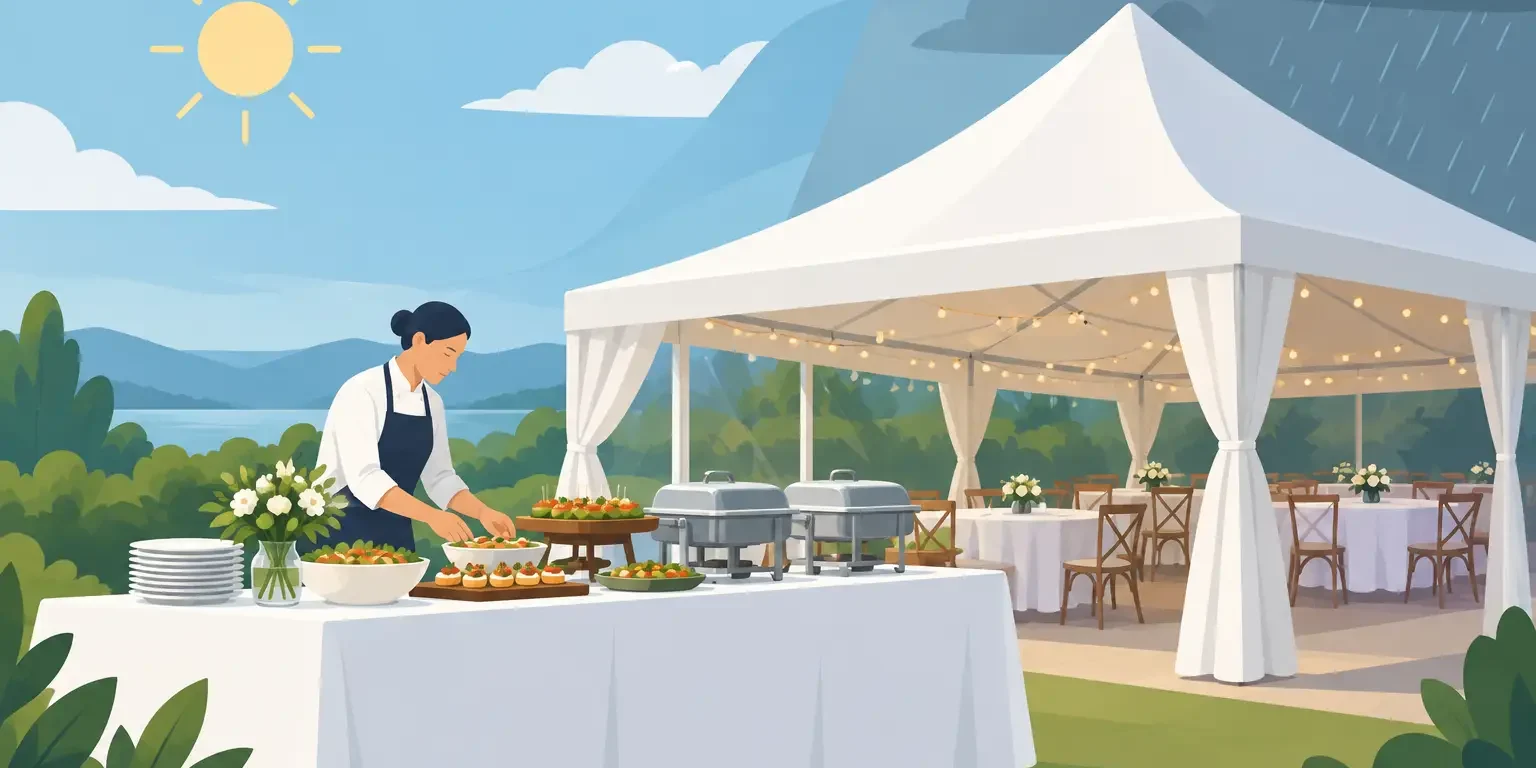
Every outdoor host should have a weather backup plan, even for a summer event. Your plan can be simple: use a covered outdoor area, shift the party to a different part of the property, move guest seating indoors while the chef cooks in an approved outdoor location, or reschedule if severe conditions make the event unsafe.
What matters is deciding before the day arrives. If rain starts 20 minutes before guests show up, you do not want to be dragging tables through puddles while texting everyone for advice.
Talk with your catering team about their weather policy and the best option for your space. Light rain may be manageable with a safe, open-sided covered area. Thunderstorms, lightning, high winds, flooding, or unsafe ground conditions are a different situation. Safety has to come first for your guests and the chef.
It also helps to tell guests what to expect. A quick note in the invitation such as, “This is an outdoor party, so bring a light layer for later,” keeps everyone comfortable without making the event feel overly formal. For a possible drizzle, have umbrellas ready for the walk from cars to the house.
Keep Guests Comfortable Through Heat, Wind, and Cold
The food is the main event, but guest comfort determines whether people stay relaxed and social. In hot weather, create shade for seating and drinks. Set out cold water before guests arrive, and place the beverage station away from direct sunlight. If the party is during peak afternoon heat, keep desserts, cakes, and anything melt-prone indoors until it is time to serve them.
For a breezy day, use heavier tablecloth clips or skip loose linens altogether. Lightweight decorations, paper plates, napkins, and balloons can become a headache fast. Choose sturdy serving pieces and keep simple centerpieces low so they do not blow over or block conversation.
Cooler-weather hibachi parties can be a great time, especially for fall birthdays and family celebrations. Add outdoor heaters where appropriate, provide throw blankets, and let guests know to dress for the temperature. Keep in mind that heaters should warm the seating area, not crowd the chef’s cooking space or create a tripping hazard with cords.
If children are attending, plan for them first. They may get cold, overheated, or restless faster than adults. A nearby indoor space for games, cake, or a break from the weather can make the whole party easier for parents.
Protect the Food and the Flow of the Party
Live hibachi cooking offers a major advantage for outdoor events: guests see their meal prepared hot and fresh. Still, the party needs a sensible food plan around the grill experience.
Keep appetizers light and easy to manage before the chef starts cooking. Chips, dips, fruit, and a simple snack table work better than a large spread that has to sit outside for hours. If you are serving a cake, charcuterie, or cold desserts, bring them out close to serving time and keep them protected from sun, insects, and unexpected drizzle.
Set up drinks, plates, and seating before the chef arrives. That way, once the grill is hot, your guests can focus on the show. For larger groups, arrange seating so people can see the chef without forming one crowded wall around the cooking area. A few extra chairs or standing tables give guests flexibility while keeping traffic moving.
Ask guests for dietary needs and protein preferences in advance. A clear headcount helps the event run on time, and it gives everyone confidence that there will be something they can enjoy. Package-style hibachi catering is especially convenient here because hosts can plan the meal without juggling multiple restaurant orders or setting up a full buffet themselves.
Build a Backup Space That Still Feels Like a Party
Your rain plan should not feel like a sad compromise. If guests need to spend more time indoors, turn that area into a comfortable party zone. Clear a space for drinks, music, gifts, and cake. Keep the outdoor cooking area accessible if conditions allow, and let the kitchen or living room become the place guests return to between courses.
For a backyard hibachi event, the grill remains the visual center of the experience, but the whole party does not need to stand outside at once. Guests can rotate between the chef performance, conversation inside, and a covered seating area. This works particularly well for groups of 20 or more.
At Parties by Feng, the best events are the ones where hosts feel prepared enough to relax. You do not need a picture-perfect backyard or a weather forecast with zero clouds. You need a workable space, a clear backup plan, and a setup that lets guests enjoy the chef, the food, and each other.
A little weather planning protects more than the menu. It protects the feeling you wanted when you invited everyone over: a celebration that stays warm, lively, and memorable no matter what the sky decides to do.