A backyard hibachi party can be one of the easiest ways to feed adults and kids without turning the host into the cook, server, and cleanup crew. But can teppanyaki serve children? Absolutely. With the right menu choices, seating plan, and a little communication before the chef arrives, live hibachi can be a fun, family-friendly centerpiece for birthdays, graduations, reunions, and milestone celebrations.
The best part is that children do not have to eat exactly like the adults to enjoy the experience. They can watch the chef cook, laugh at the performance, try a few familiar favorites, and eat at their own pace while the grown-ups get to relax and enjoy the party too.
Can Teppanyaki Serve Children Safely?
Yes, teppanyaki can work very well for children when the cooking area is treated with the same common-sense care you would use around any hot grill. A mobile hibachi chef cooks on a high-heat grill in front of guests, which is exciting for kids but also means parents should help set clear expectations before dinner begins.
Choose a setup spot with enough open space around the grill. Keep strollers, loose toys, balls, and active play away from the cooking station. Younger children should sit beside or across from a parent or another responsible adult, rather than at the edge nearest the chef’s work area. It is also smart to explain that the grill is not a stage, even when the onion volcano and food tricks get everyone laughing.
A professional chef is used to working in front of groups and managing a lively crowd. Still, the safest parties are the ones where adults stay aware of little guests, especially during arrival, setup, and the cooking show. If your group includes toddlers, plan for them to be seated with supervision or served once the food is ready rather than expecting them to stay engaged through every part of the performance.
Why Kids Usually Love a Hibachi Party
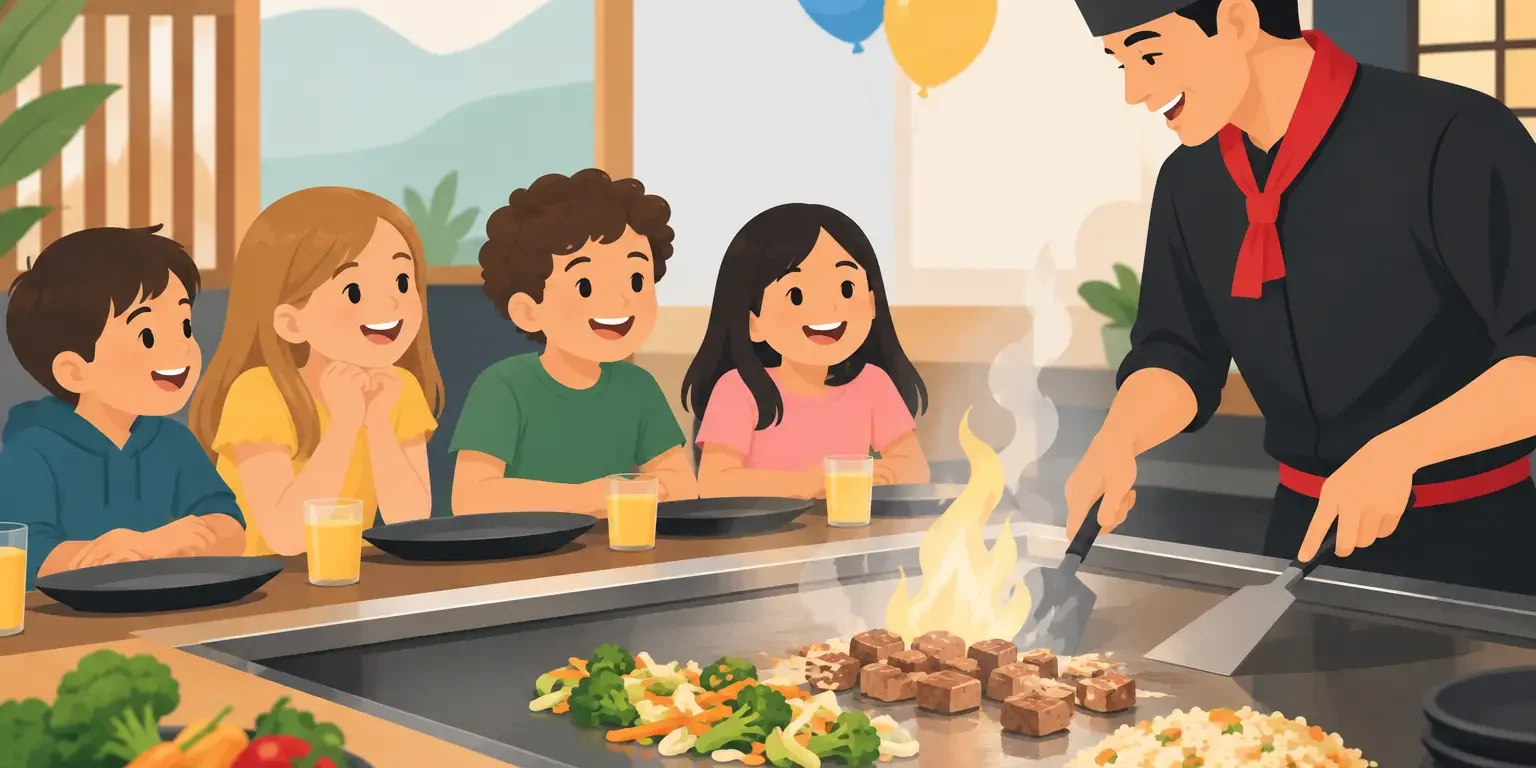
Children tend to respond to hibachi because it feels like dinner and entertainment happening at the same table. Instead of waiting quietly for a plated meal, they can see the vegetables, rice, and proteins being cooked fresh in front of them. The sounds, movement, and chef interaction give a birthday dinner or family gathering a built-in activity.
That said, every child is different. Some kids love the big reactions and playful chef moments. Others may be sensitive to noise, heat, or unfamiliar foods. Let the chef know if your child is shy, easily startled, or has sensory needs. A good party plan leaves room for children to watch from a comfortable distance, skip a particular trick, or simply focus on the food they know they like.
Hibachi is especially useful for mixed-age celebrations. Adults get restaurant-style food and a social experience, while kids have something to talk about long after the party is over. It also reduces the need to schedule separate entertainment, which keeps planning simpler for the host.
Build a Kid-Friendly Teppanyaki Menu
The easiest approach is familiar food first, adventurous choices second. Fried rice, noodles if offered, grilled chicken, vegetables, and simple steak options are usually approachable for children. Ask ahead about available proteins and whether sauces, seasoning, or vegetables can be adjusted for younger guests.
For picky eaters, small portions matter. A child may happily eat rice and chicken but leave the zucchini untouched. That is normal, and it does not mean hibachi was the wrong choice. The goal is to provide enough recognizable options that each child can make a plate they will actually enjoy.
When you are gathering guest details, ask parents about dietary restrictions and allergies early. This is more than a courtesy when food is being prepared on a shared grill. Be specific about allergies, including shellfish, egg, soy, gluten, dairy, sesame, and nut concerns. Also mention vegetarian meals and any preference for mild seasoning. The chef or catering team can tell you what is feasible and whether a separate preparation approach is needed.
Do not assume that “no sauce” solves every allergy concern. Sauces, marinades, fried rice ingredients, and grill contact can all matter. Clear information before the event gives everyone the best chance to plan confidently.
Good choices for younger guests
Children often do best with grilled chicken, fried rice, plain rice if available, and vegetables they already recognize. Older kids may enjoy steak, shrimp, or a mix of proteins, especially when they are invited to choose their own meal.
If several children are attending, ask whether there is child pricing or a children’s portion option. This can make a private hibachi event more practical for family parties, particularly when younger guests will not eat a full adult meal. Availability and age guidelines can vary, so confirm the current details while booking instead of guessing.
Plan the Seating Around Real Family Needs
A beautiful teppanyaki setup does not need to be complicated, but it should match your guest list. Count every person who will need a seat, including children who are old enough to eat at the table. High chairs, booster seats, and room for wheelchairs or mobility needs should be considered before the chef arrives.
For a kid-heavy birthday party, consider seating families together. Parents can help with drinks, napkins, cutting food, and bathroom breaks without constantly moving around the grill. It also makes it easier to serve a child who wants food cut into smaller pieces or needs a meal cooled down before eating.
Timing matters too. Very young children may struggle with a late dinner or a long wait after cake and games. A late-afternoon start can be a comfortable choice for birthday parties with smaller kids. For school-age children and teens, an early evening chef experience often works well and still gives the party a special feel.
If you are hosting a larger crowd, ask about the flow of service. Some groups may need multiple grill seatings or a buffet-style option. Knowing the plan ahead of time prevents the kids from getting restless and helps you schedule activities, cake, and gifts around the meal.
Keep the Party Fun Without Overplanning It
Live hibachi already creates a moment, so most hosts do not need to stack the schedule with extra entertainment. A few simple activities before the chef begins are usually enough for children: backyard games, a craft table, music, or a birthday photo area. Once cooking starts, let the chef performance be the main event.
It helps to keep drinks and small snacks available if children arrive hungry. Avoid filling them up right before dinner, but water, juice, and a light appetizer can prevent the pre-meal crankiness that every parent recognizes.
For birthdays, save cake for after the chef has finished cooking and guests have had time to eat. This keeps the meal from feeling rushed and gives kids something to look forward to after the grill show. If you plan to bring out decorations or sing, make sure there is a clear, safe space away from the hot grill.
Questions to Ask Before Booking a Family Hibachi Party
Before you reserve your date, share the total guest count, number of children, approximate ages, location, and any food restrictions. Ask about minimums, child portions or pricing, menu customization, setup space, weather plans for outdoor parties, and how much room the chef needs to work safely.
You should also tell the catering team whether your event is mostly adults with a few children or a true kids-and-families celebration. That detail can shape menu recommendations and help you plan the right start time. Parties by Feng can help hosts think through these logistics before the event, so the day feels exciting instead of stressful.
A home hibachi party does not require children to have adventurous tastes or perfect table manners. It simply needs a menu with familiar choices, adults close by, and enough space for everyone to enjoy the chef safely. When those pieces are in place, kids get a front-row seat to a meal they will remember, and you get to be part of the celebration instead of stuck in the kitchen.